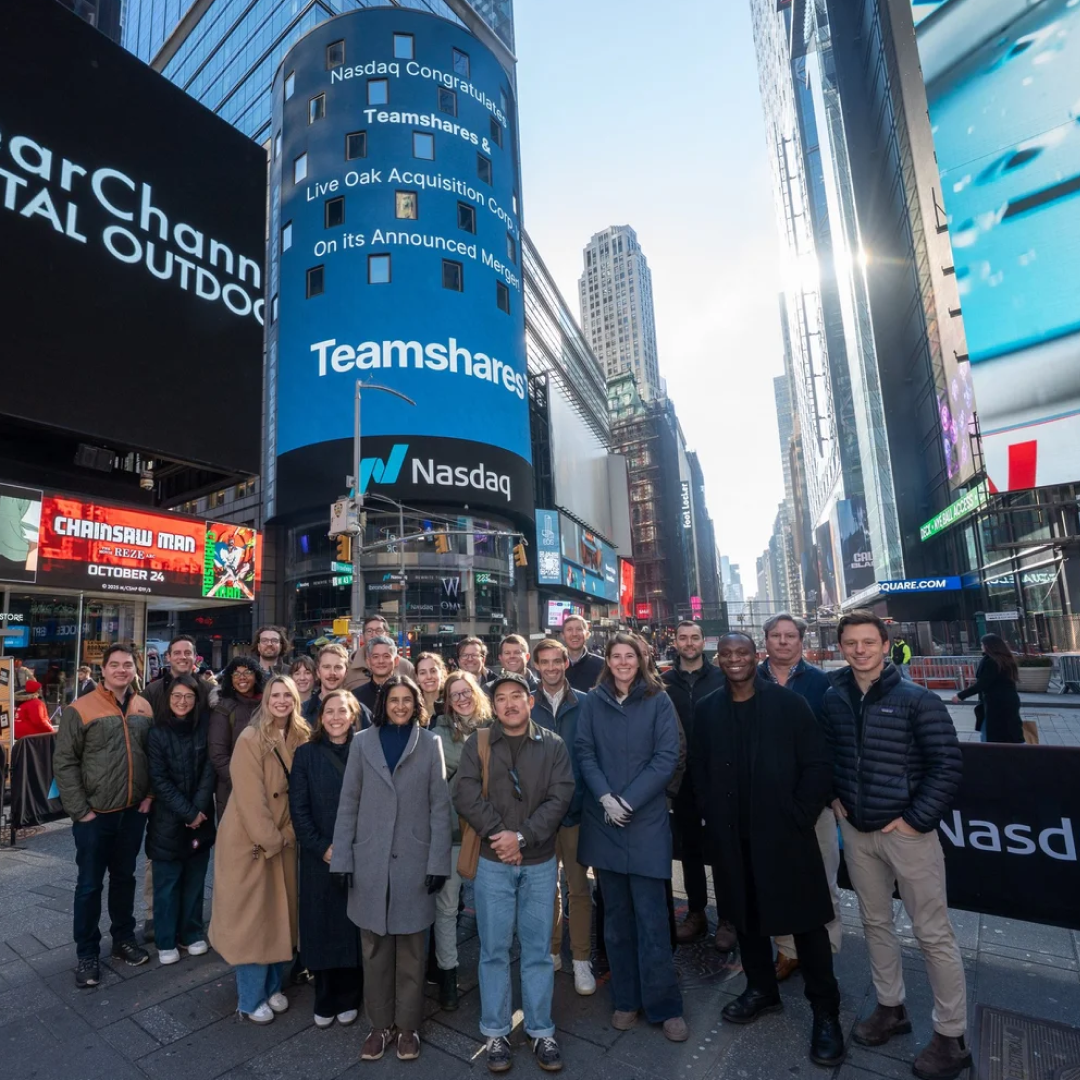
Inspired Team
Quantum computing is one of the most consequential technology shifts on the horizon and one of the least understood. It will not replace classical computing. It will do what classical computing cannot: simulate molecular behavior to accelerate drug discovery, optimize systems with thousands of interdependent variables, and break and rebuild the encryption that secures the global economy. These are problems no amount of additional GPU power will solve. They require a fundamentally different kind of machine.
The field is small, early, and deeply technical. There are roughly 400 quantum startups globally and an estimated 400 to 500 true quantum science experts in the world. And yet the estimated market opportunity is $850 billion by 2035, governments are funding this as a matter of national security, and the pace of technical progress over the past 18 months has surprised even the most optimistic researchers. After conducting 100+ expert conversations with CEOs, academics, investors, and government officials across the ecosystem, Inspired is excited to partner with exceptional founders in this space. With our team’s deep ties to government, academia, and hyperscalers, we are uniquely positioned to deliver value for companies in the quantum ecosystem.
Why Now
- Science is crossing over from experimental to engineered. Google's Willow chip crossed a threshold the field had been chasing for decades, demonstrating that adding more qubits actually reduces the error rate rather than amplifying noise. IBM is projecting a verified quantum advantage by the end of 2026. Microsoft and Atom Computing are delivering the first error-corrected machines to research institutions this year. A recent paper in Science declared that quantum has reached its "transistor moment," the point where functional systems exist and the challenge shifts to manufacturing and scale.
- The hardware race is narrowing in a way that favors venture. Superconducting circuits remain the most mature approach, backed by Google, IBM, and Amazon. Neutral atoms are gaining serious momentum with scalability advantages that could prove decisive. Unlike the foundational model layer of AI, where commoditization risk at this stage runs high, growing conviction suggests one or two hardware approaches will dominate and a small number of companies within each will lead. Picking the right technology and the right team can yield outsized returns.
- Governments are treating quantum as a matter of national security. Funding today is roughly 75% government, 25% private. DARPA's Quantum Benchmarks Initiative is matching private capital dollar-for-dollar, up to $300 million per company. The first nation to achieve a fault-tolerant quantum computer gains the theoretical ability to break all current encryption, a scenario the security community calls "Q-day." This sovereign race ensures sustained public investment and a growing base of government contracts that will anchor startup revenue long before commercial markets materialize.
- AI's energy problem is quantum's strategic opening. Powering today's largest AI systems requires the energy output of small power plants. Quantum computers can perform equivalent computations using a fraction of the electricity. As AI workloads scale and energy constraints tighten, quantum's power efficiency moves from a technical footnote to a strategic imperative.
Where We See Opportunity
Quantum is currently a hardware play, shifting toward algorithms and software over time. We see five areas where consequential companies will be built:
- A small number of full-stack hardware companies will build the quantum computer itself → Logiqal.
Logiqal, founded by Princeton professor Jeff Thompson, is building a neutral atom quantum computer whose core innovation, erasure conversion, reduces the physical qubits needed for fault tolerance by 10 to 100x. In June 2025, Inspired led Logiqal's seed round to back a world-class scientist building a generational company. - Every quantum computer will need cooling, control, and error correction → Enabling infrastructure
spanning cryogenics, control electronics, and error correction systems that serve multiple hardware modalities - Scaling beyond a single processor will require quantum networking → Interconnect and modular
architecture companies, analogous to what Mellanox built for classical computing - Enterprises will need tools to experiment before fault tolerance arrives → Hybrid quantum-classical
software delivering value in simulation, optimization, and risk modeling - The entire digital economy will need to be re-secured → Post-quantum cryptography protecting
systems from the encryption threat that a functional quantum computer would pose
Inspired’s Quantum Value-Add
Quantum computing is an industry where success depends on more than breakthrough technology. Commercialization requires navigating governments, national labs, hyperscalers, research institutions, and Fortune 500 customers, all while attracting world-class talent and capital. We believe the companies that define the quantum era won't be built in isolation. They will be built at the intersection of science, industry, and public policy.
At Inspired, we spent years building relationships across that ecosystem before making our first investment. Inspired Co-founder Penny Pritzker brings an unparalleled network spanning government, academia, and industry. As former U.S. Secretary of Commerce, Microsoft board member, Chair of the Harvard Corporation, and a longtime leader in Chicago's innovation ecosystem, she offers connectivity that few investors can match. Combined with Inspired's partnership with P33 and the Chicago quantum ecosystem, our founders benefit from relationships across major federal commercialization initiatives, including DARPA's Quantum Proving Ground, the EDA Tech Hub, and the NSF Regional Innovation Engine, as well as the Department of Energy, the Department of Commerce, and the policymakers shaping the future of quantum in the United States.
That network extends well beyond government. Through our relationships with leaders at Microsoft, IBM, JPMorgan, McKinsey, BCG, Harvard, the Chicago Quantum Exchange, and many of the world's leading research institutions, we help founders access prospective customers, strategic partners, and technical experts at the highest levels. Our role is to help founders navigate that ecosystem, accelerate commercialization, and build enduring category leaders.
Looking Ahead
We are looking for founders who are among the best scientists in the world and who have the ambition and leadership to build companies, not just publish papers. Quantum talent is rarer than AI talent, and we are actively building relationships across the key hubs. The founders we back will need to recruit across disciplines, from cryogenic engineers to software developers, and we want to be the partners who help them do it.
This is a category that rewards conviction. The moats that matter here are measured in physics breakthroughs and manufacturing know-how, not in software features replicable in a quarter. The companies that define quantum computing are being started now, and the window for early-stage investors to earn meaningful ownership is narrowing. We intend to be in those rooms early.
If you're building in quantum computing, quantum infrastructure, or quantum-enabled applications, we'd love to hear from you.